

Why Home Remodeling Loans Are Essential for Your Dream Renovation
Home remodeling loans provide the financing you need to transform your property without draining your savings account. Whether you’re planning a kitchen makeover or a complete home renovation, these loans offer structured payment plans that make large projects affordable.
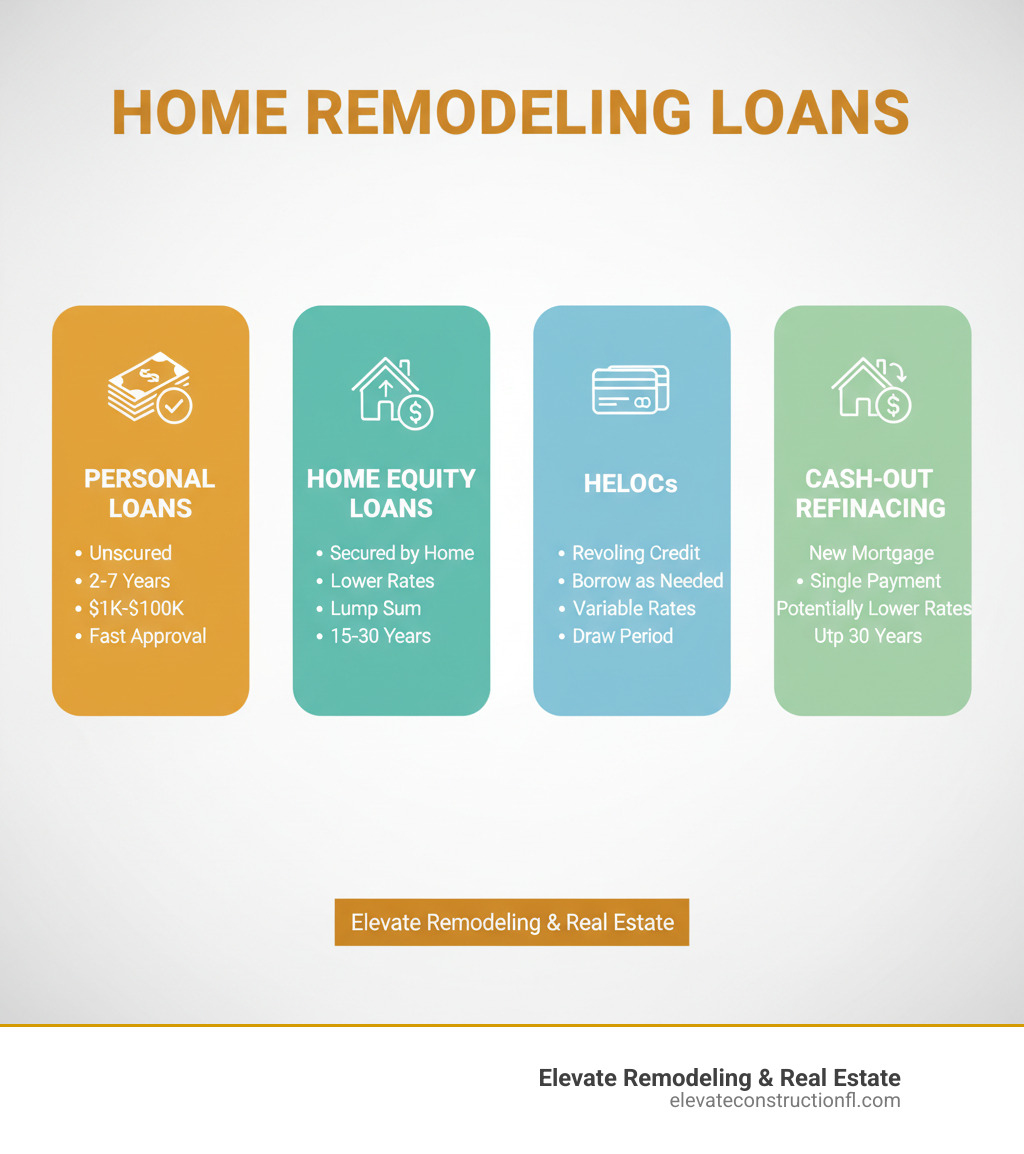
Quick Answer: Types of Home Remodeling Loans
- Personal Loans – Unsecured, fast approval, $1,000-$100,000
- Home Equity Loans – Secured by your home, lower rates, larger amounts
- HELOCs – Revolving credit line, borrow as needed
- Cash-Out Refinancing – Replace mortgage with larger loan, get cash difference
Home improvement costs add up fast. A full kitchen renovation runs $25,000-$50,000+, while bathroom remodels cost $10,000-$20,000. Without proper financing, these numbers can stop your project before it starts.
The good news? Multiple loan options exist to match your project size and financial situation. From quick personal loans for smaller updates to home equity products for major renovations, the right financing can turn your vision into reality.
Choosing the wrong loan type can cost you thousands in unnecessary interest or fees. Understanding your options helps you secure better rates and terms that fit your budget.
As Johanna Cifuentes, I’ve guided countless Tampa Bay homeowners through the complexities of home remodeling loans during my time at Elevate Remodeling & Real Estate, helping them secure optimal financing for their renovation projects. My experience in both construction and real estate gives me unique insight into matching the right loan to each project’s specific needs.
Exploring Your Options for Home Remodeling Loans
Picture this: you’re standing in your outdated kitchen, dreaming of sleek countertops and modern appliances. The vision is crystal clear, but the path to funding it? Not so much. Don’t worry – you’re not alone in feeling overwhelmed by home remodeling loans.
The good news is that there’s a financing option for virtually every project and budget. From quick personal loans for smaller updates to home equity products for major overhauls, understanding your choices helps you make smart decisions that won’t break the bank.
The key difference you’ll encounter is between secured and unsecured loans. Think of it like this: secured loans use your home as a safety net for the lender, which usually means better rates for you. Unsecured loans don’t require collateral but typically come with higher interest costs.
Your project size should guide your loan choice. Planning a bathroom refresh? A personal loan might be perfect. Dreaming of a whole-house renovation? Home equity options could be your best bet.
To help you steer these waters, we offer comprehensive funding services where our team can guide you toward the financing that makes the most sense for your specific project.

Secured vs. Unsecured Loans: The Fundamental Difference
Let’s break down the most important concept in lending: collateral. This is simply an asset (like your home) that you promise to the lender as security. If you can’t make payments, they can claim that asset to recover their money.
Secured loans require collateral, and here’s why that matters to you: lenders feel safer, so they offer lower interest rates. When you use your home as collateral (like with home equity loans), you’re essentially telling the lender, “I’m so confident I can repay this that I’m willing to put my house on the line.”
The trade-off? If you fall behind on payments, you could risk losing your home. But for responsible borrowers, secured loans open doors to larger loan amounts and more favorable terms.
Unsecured loans flip this equation. No collateral means higher interest rates, but also means no collateral risk. Your home stays safe even if you struggle with payments. Approval depends entirely on your personal borrowing power – your credit score, income, and debt levels.
Personal Loans for Renovations
Personal loans are the straightforward choice for many homeowners. Since they’re unsecured, your home isn’t directly at risk, which brings peace of mind to many borrowers.
These loans come with fixed interest rates and set repayment terms, typically spanning 2-7 years. This predictability makes budgeting simple – you’ll know exactly what you owe each month from day one.
Smaller loan amounts are the norm here, though you can still access substantial funding. The fast funding timeline is a major advantage – some lenders can get money in your account within days of approval. The simple application process means less paperwork and fewer hoops to jump through.
Personal loans shine for smaller or single projects. Think updating one bathroom, replacing your HVAC system, or tackling that long-overdue roof repair. They’re perfect when you know exactly what you need and want to get started quickly.
Leveraging Home Equity: Loans and Lines of Credit (HELOCs)
Your home equity is the portion of your house you actually own. We calculate this by subtracting your mortgage balance from your home’s current value. If your home is worth $400,000 and you owe $250,000, you have $150,000 in equity to potentially borrow against.
Since these loans are secured by your home, lenders offer lower interest rates and larger loan amounts. You’re essentially borrowing against the wealth you’ve already built.
A Home Equity Loan gives you a lump sum upfront – perfect when you know exactly how much your project will cost. You’ll get fixed payments over 15-30 years, making budgeting straightforward.
A HELOC works like a revolving credit line. During the draw period, you can borrow what you need, when you need it. This flexibility is ideal for projects that unfold in phases or when costs might change along the way. You can learn more about the benefits of a line of credit for ongoing projects.
Mortgage-Based Financing: Cash-Out Refinancing
Cash-out refinancing takes a different approach entirely. You’re replacing your current mortgage with a new, larger loan, then receiving cash at closing for the difference.
This strategy can offer potentially lower interest rates than other financing options, especially in favorable market conditions. You’ll have just one single monthly payment to manage, and the longer repayment term can keep monthly costs manageable.
This approach works best for major renovations that significantly boost your home’s value. Since you’re essentially starting over with a new mortgage, make sure the timing aligns with your long-term financial goals and current interest rate environment.
How to Choose the Right Renovation Loan
Picking the perfect home remodeling loan feels a bit like choosing the right tool for a job. You wouldn’t use a sledgehammer to hang a picture frame, right? The same logic applies to financing your renovation dreams. The key is matching your loan choice to your project’s size, your financial situation, and your comfort level with risk.
Think of it this way: a small bathroom refresh might need a completely different financing approach than a whole-house makeover. We’ve seen homeowners save thousands simply by choosing the right loan type from the start. Others have learned the hard way that rushing into the wrong financing can turn their dream project into a financial headache.
The good news? With a little planning and the right information, you can avoid those pitfalls entirely. Our team at Elevate Remodeling & Real Estate has helped countless Tampa Bay families steer these decisions, and we’re here to share what we’ve learned along the way.
For projects that need expert oversight from start to finish, you might also want to explore our construction management services to ensure your renovation stays on track and on budget.
Comparing Home Equity Loans vs. Personal Loans
Let’s break down two of the most popular options side by side. This comparison will help you see which path might work better for your specific situation.
| Feature | Home Equity Loan (Secured) | Personal Loan (Unsecured) |
|---|---|---|
| Loan Type | Secured by your home | Unsecured (no collateral required) |
| Loan Amount | Often larger (e.g., $25,000 – $100,000+) | Generally smaller (e.g., $1,000 – $50,000, some up to $100,000) |
| Interest Rates | Typically lower, as your home is collateral | Typically higher, due to increased lender risk |
| Repayment Term | Longer (e.g., 10-30 years) | Shorter (e.g., 2-7 years) |
| Funding Speed | Slower (requires appraisal, closing process) | Faster (can be as quick as one day) |
| Best For | Large, expensive, one-time projects (e.g., kitchen remodel, addition) | Smaller to medium projects, quick fixes, or if you prefer not to use home as collateral |
Here’s the reality: if you’re planning a major kitchen renovation that’ll cost $40,000, a home equity loan probably makes more financial sense. You’ll get a lower interest rate and longer repayment terms. But if your water heater just died and you need $8,000 fast for a replacement and some plumbing updates, a personal loan might be your best friend.
Key Factors for Your Home Remodeling Loans Decision
When we sit down with homeowners in Tampa Bay, we always walk through these crucial factors together. Getting these right from the start can save you serious money and stress down the road.
Interest rates deserve your closest attention, but here’s the catch: don’t just look at the advertised rate. The Annual Percentage Rate (APR) tells the real story because it includes all those sneaky fees and charges. It’s like comparing the true cost of two cars instead of just looking at the sticker price.
You’ll also need to decide between fixed and variable rates. Fixed rates give you the same payment every month, which makes budgeting a breeze. Variable rates can start lower but might climb later, kind of like those introductory credit card offers. Most personal loans and home equity loans stick with fixed rates, while HELOCs often go the variable route.
Repayment terms create an interesting balancing act. Longer terms mean smaller monthly payments that are easier on your budget right now. But you’ll pay more interest over time. Shorter terms hit your monthly budget harder but save you money in the long run. It’s really about what works better for your family’s cash flow.
Make sure your loan amount covers not just your planned expenses but also those surprise costs that seem to pop up in every renovation. We always tell our clients to budget an extra 10-20% for the unexpected. Trust us on this one – that \”small\” plumbing issue behind the kitchen wall has derailed more than a few renovation budgets.
Fees and penalties can sneak up on you if you’re not careful. Some lenders charge origination fees, closing costs, or penalties if you pay off the loan early. These might seem small in the paperwork, but they add up fast. Always ask about the total cost of borrowing, not just the monthly payment.
Finally, lender reputation matters more than you might think. We’ve seen families get stuck with unresponsive customer service right when they needed help most. Take a few minutes to read reviews and understand their policies before you sign anything.
Understanding Eligibility and Application Timelines
Before you get too excited about that new kitchen island, let’s talk about what lenders actually look for and how long this whole process might take.
Your credit score acts like your financial report card. Most lenders want to see a FICO® Score of 670 or higher for the best rates on home equity products. Even with fair credit (580-669), you can still qualify for personal loans, though you’ll probably pay higher interest rates. The better your credit, the more options you’ll have and the less you’ll pay.
The debt-to-income ratio is another big factor. Lenders typically prefer to see 43% or less when they add up all your monthly debt payments and compare them to your gross monthly income. This includes everything from your mortgage to your car payment to that store credit card you forgot about.
Be ready to prove your income with recent pay stubs, tax returns, or employment letters. Lenders want to feel confident you can handle the new payment alongside your existing obligations.
If you’re going with any loan secured by your home, you’ll need a property appraisal. This determines your home’s current value and how much equity you can actually borrow against. Sometimes the appraised value surprises homeowners – either pleasantly or not so much.
Timeline expectations vary quite a bit depending on your loan choice. Personal loans can move incredibly fast, sometimes funding within a day of approval. Home equity loans and HELOCs typically take several weeks to a month or more because of appraisals and closing requirements. Cash-out refinancing works like getting a new mortgage, so plan for 30-45 days or longer.
Our advice? Start the loan application process well before you want to break ground on your project. This gives you time to shop around for the best rates and terms without feeling pressured to accept the first offer that comes along.
Specialized and Government-Backed Loan Programs
Sometimes the best financing solutions come from outside traditional banking channels. Home remodeling loans backed by government programs can open doors that conventional lenders might keep closed, especially if you’re buying a fixer-upper or need more flexible terms than typical bank offerings provide.
These specialized programs exist because the government recognizes that improving housing stock benefits entire communities. They’re designed to help homeowners tackle projects that might otherwise be financially out of reach, from structural repairs to energy-efficient upgrades.

FHA 203(k) and HUD Title I Loans Explained
If you’ve ever driven past a house and thought “That place has great bones but needs everything else,” an FHA 203(k) loan might be exactly what you need. This program lets you roll both the home purchase and renovation costs into a single mortgage, which is incredibly convenient and often more affordable than separate financing.
The FHA 203(k) Rehabilitation Mortgage comes in two flavors. The Limited 203(k) handles non-structural improvements under $35,000 – think new flooring, kitchen appliances, or bathroom updates. The Standard 203(k) tackles the big stuff like structural repairs, room additions, or complete overhauls, with a minimum project cost of $5,000.
What makes this program special is that it’s insured by the Federal Housing Administration, making lenders more willing to work with borrowers who might not qualify for conventional loans. You can often get started with a lower down payment too, which helps when you’re already budgeting for renovation costs.
HUD Title I Property Improvement Loans work differently – HUD doesn’t lend money directly but insures private lenders against losses on smaller renovation projects. These loans focus on improvements that make your home more livable, safer, or more functional. Projects over $7,500 need to be secured by your property, but there’s no prepayment penalty if you want to pay it off early.
You can learn more about About Title I Property Improvement Loans directly from HUD’s official resources.
Fannie Mae HomeStyle® Renovation Mortgages
For homeowners who want conventional loan benefits with renovation flexibility, the Fannie Mae HomeStyle® Renovation mortgage offers an attractive middle ground between government programs and traditional financing.
This program shines because of its versatility. Whether you’re buying a home that needs work or refinancing your current place to fund major improvements, you can combine everything into one loan with one monthly payment. The renovation possibilities are extensive – kitchen remodels, bathroom updates, room additions, new HVAC systems, even projects that improve your home’s disaster resilience.
The single closing process eliminates the hassle of coordinating multiple loans and timelines. Instead of juggling a purchase mortgage plus a separate construction loan, you handle everything at once. For first-time buyers or those using HomeReady® mortgages, down payments can start as low as 3%, making it easier to get into a home you can customize to your needs.
Unlike some government programs, HomeStyle® loans don’t restrict you to specific types of improvements as long as they’re permanently attached to the property and add value. This flexibility makes it perfect for homeowners with big renovation dreams who want conventional loan terms.
For detailed program information, check out More on the HomeStyle Renovation mortgage from Fannie Mae to see if this option fits your project plans.
Smart Renovations: Budgeting, ROI, and Energy Savings
Getting approved for home remodeling loans is exciting, but it’s just the beginning of your renovation journey. The real magic happens when you connect smart financing with thoughtful planning. We’ve seen too many homeowners rush into projects without considering the bigger picture – and trust me, that’s a recipe for stress and overspending.
At Elevate Remodeling & Real Estate, we believe in making every dollar count. Whether you’re dreaming of a spa-like bathroom or a chef’s kitchen, understanding costs, returns, and energy savings helps you make choices that benefit both your lifestyle and your wallet.
For insights into how we approach renovation projects to maximize value and efficiency, visit More info about our remodeling services.
Estimating Typical Home Renovation Costs
Before you fall in love with that gorgeous kitchen island on Pinterest, let’s talk numbers. Renovation costs can sneak up on you faster than a Florida thunderstorm, so having realistic expectations is crucial for choosing the right loan amount.
Here’s what we typically see Tampa Bay homeowners investing in their projects:
- Full Kitchen Renovation: $25,000 – $50,000+
- Bathroom Remodel: $10,000 – $20,000
- Basement Finishing: $20,000 – $40,000
- Roof or Window Replacement: $8,000 – $15,000
- Deck, Fence, or Landscaping: $5,000 – $25,000
These numbers aren’t set in stone – your final costs depend on everything from material choices to project complexity. That subway tile might look simple, but when you’re covering an entire shower, the costs add up quickly.
Here’s our golden rule: always budget an extra 10-20% for surprises. And trust us, there are always surprises. That \”simple\” electrical update might reveal outdated wiring that needs attention. Getting detailed quotes from multiple contractors gives you the clearest picture and helps ensure your home remodeling loans cover everything you need.
Projects with the Best Return on Investment (ROI)
Let’s be honest – while you’re renovating for your own enjoyment, it’s nice to know your investment will pay off if you decide to sell later. Some projects are like that friend who always shows up when you need them – they consistently deliver value.
Garage door replacement often tops the ROI charts, sometimes returning over 190% of what you spend. It’s one of those \”why didn’t I think of that?\” improvements that dramatically boosts curb appeal without breaking the bank.
Exterior improvements like steel entry doors and stone veneer work magic too. A new front door can return around 188% of its cost, while manufactured stone veneer often exceeds 150% ROI. These projects create that crucial first impression that makes buyers (and neighbors) take notice.
Kitchen and bathroom renovations require bigger investments, but they’re still smart moves. Bathroom remodels typically see ROI rates 56% higher than average renovations, while kitchen expansions can deliver returns 44% above the norm. These spaces are where families really live, so improvements here feel both practical and luxurious.
Not every improvement needs to boost your home’s value dollar-for-dollar to be worthwhile. Sometimes the best return is simply loving your space more. But if selling is on your horizon, focusing on projects with proven track records makes financial sense. The Remodeling’s 2024 Cost vs. Value report breaks down these trends in detail.
Finding Tax Credits and Rebates for Your Home Remodeling Loans
Here’s where smart renovations get even smarter – by reducing your long-term costs and potentially putting money back in your pocket. Energy-efficient upgrades don’t just make your home more comfortable; they can qualify you for valuable tax credits and rebates that help offset your renovation expenses.
Energy audits are your starting point. These professional assessments identify where your home is wasting energy and recommend the most impactful improvements. Many rebate programs actually require an audit before you can qualify, so it’s a smart first step that pays for itself.
ENERGY STAR® products are your friends when it comes to savings. New energy-efficient windows can slash heating bills by 10-15%, while upgraded appliances reduce electricity usage month after month. These aren’t just feel-good purchases – they’re investments that keep paying dividends.
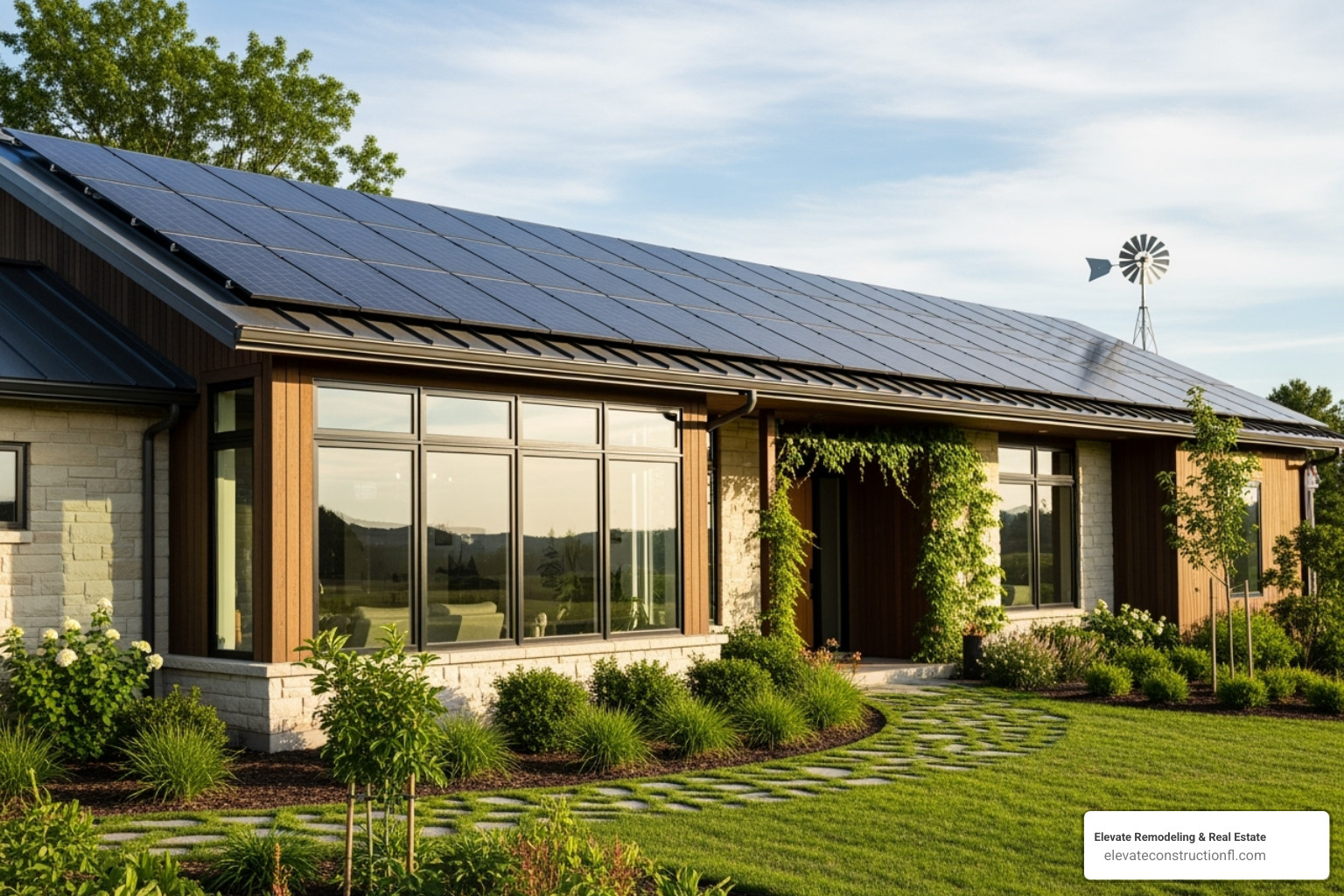
Federal and state tax credits can significantly reduce what you owe at tax time. Solar panels, energy-efficient HVAC systems, and certain insulation types all qualify for various programs. Since tax laws change regularly, it’s worth researching current federal and state programs available in Florida before finalizing your project plans.
Don’t forget about utility company rebates either. Your local providers often offer cash back for installing qualifying appliances or making energy-saving improvements. It’s like getting a bonus for doing something that already benefits you.
The combination of lower utility bills, tax savings, and rebates can make energy-efficient renovations surprisingly affordable. When you factor these benefits into your home remodeling loans planning, projects that seemed expensive suddenly make a lot more financial sense.
Conclusion
Choosing the right home remodeling loans doesn’t have to feel overwhelming. Think of it like picking the perfect tool for a job – once you understand what each option does best, the decision becomes much clearer.
We’ve walked through everything from quick personal loans that can fund your bathroom makeover in days, to home equity options that open up the value you’ve already built in your property. Government-backed programs like FHA 203(k) loans open doors for fixer-upper dreams, while cash-out refinancing can roll everything into one simple payment.
The secret sauce? Matching your financing to your specific situation. A $15,000 kitchen refresh calls for different financing than a $50,000 whole-house renovation. Your credit score, timeline, and comfort level with using your home as collateral all play important roles in this decision.
Don’t rush this choice. Take time to compare interest rates, understand all fees, and read the fine print. The difference between a great loan and an okay one can save you thousands of dollars over the life of your project.
Research is your best friend here. Check multiple lenders, understand your credit score, and get realistic cost estimates from contractors before you apply. This preparation helps ensure you borrow the right amount at the best possible terms.
For Tampa Bay homeowners, managing remodeling projects, real estate decisions, and funding options can feel like juggling three different worlds. That’s where having an all-in-one expert makes all the difference. At Elevate Remodeling & Real Estate, we understand that great renovations start with smart financing decisions and end with exceptional craftsmanship.
Ready to transform your space with confidence? Contact Elevate Remodeling & Real Estate to start your project today and let our experienced team guide you through every step of the process.