

Why Kitchen Remodel Project Management Makes or Breaks Your Renovation
Kitchen remodel project management is the art and science of changing your kitchen into a functional, beautiful space while staying on budget and schedule. Without proper management, your dream renovation can quickly become a nightmare of delays, cost overruns, and subpar results.
Essential elements of kitchen remodel project management:
- Planning Phase: Goal setting, budgeting, design, and team assembly
- Execution Phase: Managing timelines, coordinating trades, and quality control
- Communication: Clear channels between homeowner, contractors, and suppliers
- Timeline Management: Sequencing work phases and managing dependencies
- Budget Control: Tracking costs and handling unexpected expenses
- Quality Assurance: Inspections and final walkthrough
The project manager acts like the conductor of an orchestra, coordinating contractors, suppliers, and homeowners to create harmony instead of chaos. A project manager oversees schedules, coordinates contractors, and manages communication to keep the project on track and aligned with the homeowner’s vision.
The stakes are high. The average kitchen remodel costs around $26,934, and poor project management can easily push that number 20-30% higher. When done right, effective management ensures your investment pays off with a kitchen that adds real value to your Tampa Bay home. At Elevate Remodeling & Real Estate, we’ve seen how proper project management makes the difference between a stressful ordeal and a smooth change, because success comes down to detailed planning and flawless execution.
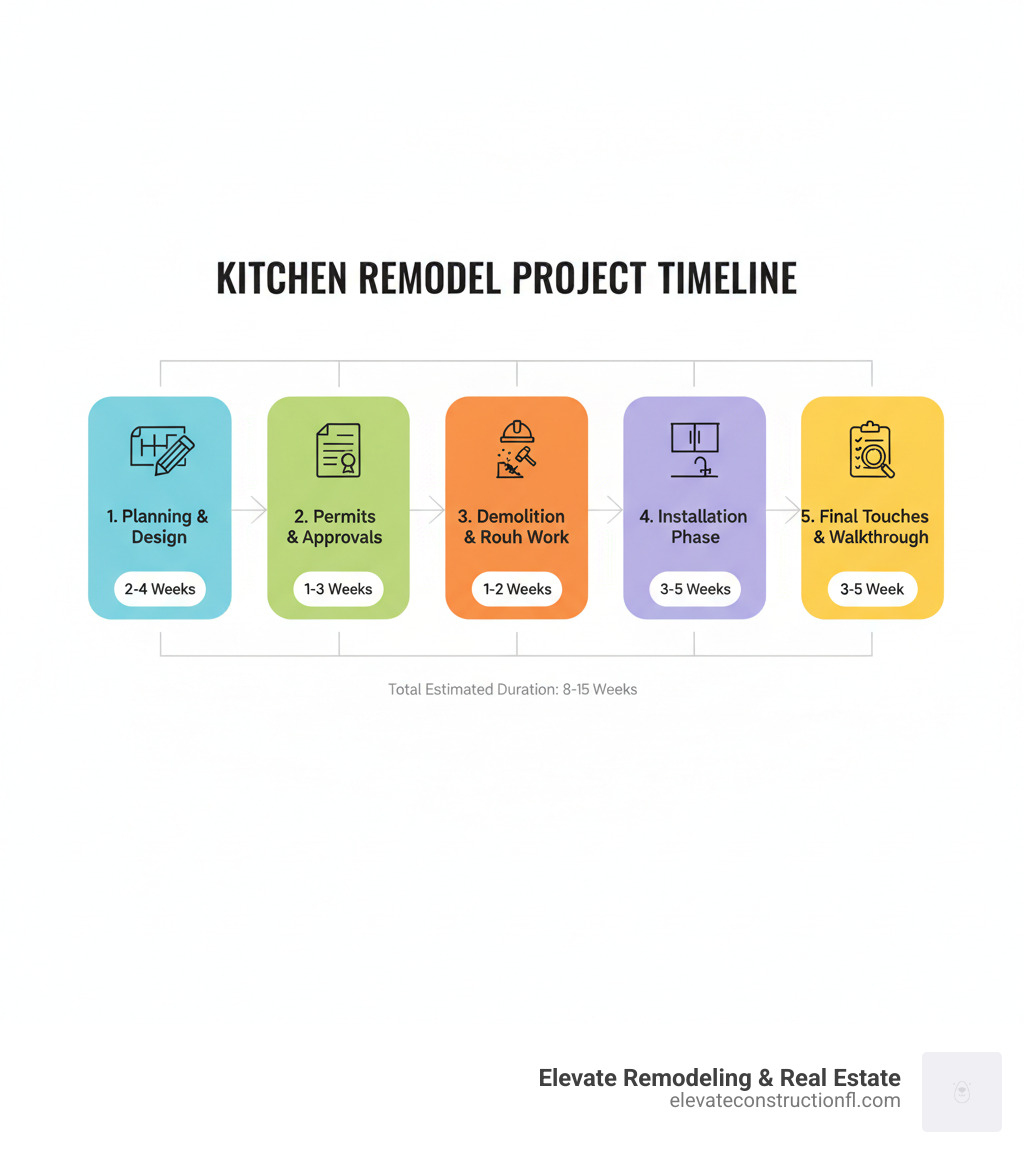
Phase 1: The Blueprint for Success – Planning Your Renovation
They say “measure twice, cut once,” and that wisdom couldn’t ring truer for a kitchen remodel. The planning phase is where dreams meet reality, changing Pinterest boards into a concrete roadmap. This is your chance to get everything right before the first wall comes down.

Goal setting is where your journey begins. What drives you crazy about your current kitchen? Where do things pile up? We recommend organizing your goals into categories: non-negotiables (like extra storage), primary wants (a kitchen island), nice-to-haves (a wine fridge), and future-proofing elements. This approach keeps you focused.
Assessing your current space means looking beyond the everyday. Walk through your morning routine and notice pain points. These will guide your design decisions and help create a kitchen that works for your lifestyle.
Your master plan becomes the North Star for your project. This involves creating detailed layouts with precise measurements, establishing your style, and documenting every decision. The more thorough you are now, the fewer surprises you’ll face later. A comprehensive Kitchen Checklist for planning a kitchen remodel can cover all the bases.
Creating a Realistic Budget and Securing Funding
Realistic budgeting is critical for kitchen remodel project management. According to industry sources, the average remodel costs around $26,934, but this can swing from $14,600 for a modest refresh to over $41,485 for a luxury overhaul.
A good budgeting rule of thumb is to spend between 5% and 15% of your home’s value on your kitchen remodel. This keeps your investment proportional and helps with resale value.
The traditional cost breakdown allocates roughly one-third each for cabinets, installation, and everything else. Cabinetry is often the biggest slice at $2,000–$28,000, while countertops run $2,000–$10,000, and appliances can range from $100 to $5,000+.
Don’t forget smaller expenses: flooring ($1,000–$4,000), lighting ($500–$2,000), electrical work ($500–$2,000), plumbing ($200–$2,000), backsplash ($600–$1,300), gas lines ($250–$750), paint ($100–$500), and permits (around $450).
Here’s the most important budgeting advice: build in a contingency fund of 15-20% for unexpected costs, like hidden plumbing issues or structural quirks.
Saving money strategically doesn’t mean cutting corners. Invest in quality for high-use items like faucets and appliances, but consider alternatives for decorative elements. Keeping your existing layout saves thousands by avoiding major plumbing and electrical moves.
Ready to explore your funding options? More info about loans & funding can help you understand all the ways to finance your dream kitchen.
Designing Your Dream Kitchen: Layout and Style
Your kitchen layout determines its flow. The classic work triangle—connecting the sink, refrigerator, and stove—remains the gold standard for efficiency, often expanded into work zones.
Popular layouts each have their personality. The U-shape offers ample counter space. The L-shape opens the kitchen to living areas, creating a social hub. Galley kitchens maximize efficiency in smaller spaces. Island layouts create a natural gathering spot but require more square footage.
Choosing a style means thinking beyond trends. Classic designs with quality materials provide a lasting foundation, while easily changed elements like hardware and lighting let you update your look later.
Storage solutions make or break functionality. Smart storage isn’t just about more cabinets—it’s about accessible cabinets, drawer organizers, and pull-out shelves that work with your cooking style.
Want to see how form meets function? Explore our architecture & design services to find how we create spaces that work beautifully.
Selecting Materials and Appliances
This is where your vision comes to life. Every choice matters, from cabinet handles to countertops.
Cabinetry selection shapes your budget and daily experience. Streamlined cabinetry with clean lines creates a modern look, while classic designs offer timeless appeal. Materials range from solid wood to engineered options.
Countertop materials like granite and quartz need to be durable and beautiful. Granite offers natural beauty, while quartz provides consistent patterns and excellent stain resistance. Choose based on your cooking style and maintenance preferences.
Appliance selection deserves early attention. ENERGY STAR ratings indicate long-term savings. Focus on smart appliance features that match your actual cooking habits.
Flooring options like tile, hardwood, and luxury vinyl plank each have different benefits and installation requirements. Your backsplash protects walls and adds personality. Lighting should be layered with ambient, task, and accent lights.
Ordering materials in advance is crucial. Custom cabinets, countertops, and appliances often have lead times of 1-2 months or more. Having everything on-site before demolition prevents costly delays.
Assembling Your Team: Hiring the Right Professionals
Great kitchens are created by skilled teams. While you might handle painting, major construction, plumbing, and electrical work require licensed professionals to avoid expensive problems and safety hazards.
Your general contractor manages the project, coordinates subcontractors, and ensures quality control. A good GC handles schedules, trades, and problems, understands building codes, and pulls permits.
A kitchen designer brings specialized expertise in space planning and workflow optimization. Look for certified professionals who understand both aesthetics and functionality.
How to select a contractor starts with research and references. Get at least three detailed quotes, comparing services, timelines, and communication styles. Licenses and insurance are non-negotiable; they protect you and ensure professional standards.
When getting quotes, focus on value—quality work, clear communication, and realistic timelines—not just the bottom line. The cheapest bid can become the most expensive if corners are cut.
Red flags include demands for large upfront payments (over 25%), lack of licensing or insurance, vague contracts, or pressure tactics. Trust your instincts.
Contractor selection is a crucial step. Learn about our remodeling construction services to see how we bring together skilled teams and proven processes.
Phase 2: Mastering Your Kitchen Remodel Project Management
Now that your planning is solid, it’s time to execute. This is where effective kitchen remodel project management truly shines, coordinating every contractor, delivery, and decision with perfect timing.
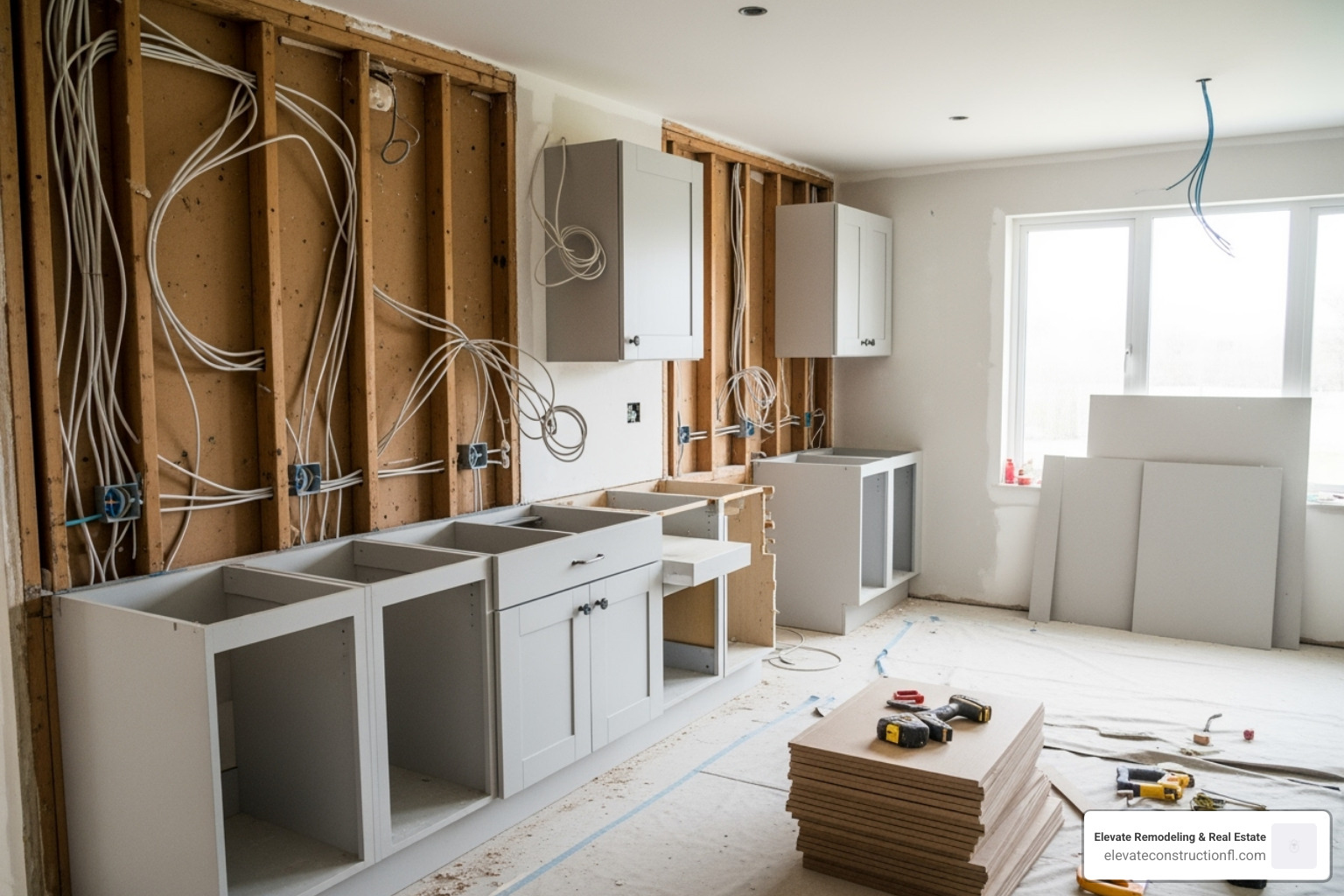
Project management tools like Gantt charts are helpful for visualizing timelines and task dependencies. These charts show when each job should start and finish, and how they rely on each other. For example, countertop installation depends on cabinet completion.
However, no tool replaces good communication. Regular check-ins with your contractor are your early warning system for potential problems and ensure everyone is aligned with the vision. Staying ahead of issues is key to The Role of Project Management in a Stress-Free Home Renovation.
The Order of Operations: From Demolition to Final Touches
Following the proper renovation sequence saves time, money, and frustration. There’s a method to the madness.
Demolition kicks things off. Professionals safely shut off utilities and haul away old cabinets, countertops, and appliances.
Next is the rough-in phase for new plumbing, electrical wiring, and HVAC ducts within the walls. This work requires inspections, so patience is key.
Once inspections pass, drywall and paint prep your surfaces. Then comes flooring. Tile is typically installed before cabinets, while other materials like luxury vinyl plank may go in after to maintain warranties.
Cabinet installation is where your kitchen takes shape. Precision is critical. Once cabinets are secure, accurate measurements are taken for countertop installation.
Appliance installation brings the kitchen to life, connecting water and gas lines. The backsplash is installed after countertops, followed by final touches like sinks, faucets, lighting, and hardware.
The final walkthrough with your project manager is your chance to spot any remaining issues before signing off. Don’t rush this step.
Effective timeline management for your kitchen remodel project
A typical kitchen remodel takes 6-12 weeks for construction, depending on complexity. Structural work or custom elements can extend this timeline.
Creating a project schedule involves understanding task durations and dependencies. Smart project managers build in buffer time for each phase to account for surprises, like outdated wiring or plumbing obstacles.
The golden rule of timeline management is to order materials early. Don’t start demolition until all new materials and appliances are in storage. Supply chain hiccups are real, and waiting on a delayed item is frustrating.
Avoiding last-minute changes is equally crucial for staying on schedule. Switching materials mid-project creates delays and cost overruns. Finalize your design and material selections during planning and stick to them.
Our team understands these challenges. Our construction management process focuses on meticulous scheduling and coordination to keep your project moving smoothly.
Communication and Surviving the Renovation
Good communication and smart preparation make living through a renovation manageable.
Clear communication channels prevent confusion. Establish how you’ll stay in touch with your contractor—email for updates, phone calls for urgent issues, and regular meetings to review progress.
Regular check-ins are problem-prevention sessions. Weekly meetings let you address small concerns before they become big issues and help you see steady progress.
Preparing for disruption means accepting a temporary change to your routine. You’ll be washing dishes in the bathroom and relying on a temporary kitchen.
Setting up a temporary kitchen is your lifeline. A mini-fridge, microwave, and coffee maker can handle basic needs. Stock up on paper plates and budget for more takeout. Prepare freezer meals ahead of time.
Managing dust and debris requires teamwork. Professional crews seal off work areas, but some dust is inevitable. Cover furniture in adjacent rooms and expect to clean more than usual. This temporary mess is part of creating your dream kitchen.
Pro Tips: Avoiding Pitfalls and Maximizing Value
Even with the best planning, a kitchen remodel can present challenges. By being aware of common pitfalls and using smart strategies, you can steer the process successfully and maximize the value of your investment.

Top 5 Common Kitchen Remodeling Mistakes to Avoid
Learning from others’ experiences can save you money and frustration. Here are the biggest pitfalls to watch for in your kitchen remodel project management journey.
Prioritizing style over function is a top mistake. An Instagram-worthy kitchen is useless if the layout is inefficient. Always ask: “Will this work for how I actually live and cook?”
Underestimating costs and skipping the contingency fund is a close second. That 10-20% buffer isn’t optional; it’s essential for handling unexpected issues that will inevitably arise.
Ignoring adequate storage needs is a classic regret. Plan for more storage than you think you need for all your pots, pans, and gadgets.
Choosing trendy designs over timeless appeal can make your kitchen feel dated quickly. Stick with classic elements and add personality through easily changed accessories like light fixtures or bar stools.
Not hiring qualified professionals for complex tasks is where penny-wise becomes pound-foolish. Licensed professionals exist for a reason—your safety and investment depend on their expertise.
Smart Ways to Save Money on Your Remodel
Being budget-conscious doesn’t mean sacrificing quality. Strategic choices can stretch your remodeling dollars.
Keeping the same layout is one of the smartest money-saving moves. Moving plumbing, electrical, or walls can add $10,000 or more to your project. If your current layout works, invest those savings elsewhere.
Mixing materials strategically lets you splurge where it counts. Use a high-end countertop on your island and a more budget-friendly option on perimeter counters.
DIY simple tasks like demolition (with safety precautions), painting, or assembling flat-pack cabinets can lead to significant savings if you have the time and skill. Check with your contractor first.
Appliance packages from the same manufacturer often come with substantial discounts and provide a cohesive look.
Cabinet refacing offers a new look at a fraction of the cost. If your cabinet boxes are sound, replacing just the doors and drawer fronts can transform your kitchen without major construction.
Frequently Asked Questions about Kitchen Remodel Project Management
Kitchen remodels can feel overwhelming. After helping countless Tampa Bay homeowners, we’ve compiled answers to the questions we hear most often.
What is the most difficult part of a kitchen remodel?
The toughest challenge is balancing the budget, schedule, and quality. What really keeps projects on their toes are the unexpected surprises behind the walls, like a hidden plumbing leak or outdated wiring that needs replacement.
Structural problems are another common curveball. A wall you thought was simple to remove might turn out to be load-bearing, requiring new support beams. These issues are the reality of renovating existing homes.
This is exactly why a 15-20% contingency fund isn’t optional—it’s your safety net. Without it, inevitable surprises can derail your project and budget.
How do I keep my kitchen remodel on track?
Staying on track with your kitchen remodel project management means being proactive.
Detailed planning is your GPS. Lock in every decision, from hardware to light switch locations, before demolition begins.
Your realistic schedule needs built-in buffer time. Ordering materials early is critical, as custom items and appliances can have long lead times.
Open communication with your team prevents small issues from becoming big problems. Weekly check-ins are smart project management.
Most importantly, resist making changes once work begins. A “quick” switch can add weeks to your timeline and hundreds to your budget.
Can I be my own project manager for a kitchen remodel?
Yes, but it’s a significant commitment, like a part-time job. Self-managing works best if you have a flexible schedule, strong organizational skills, and the patience to coordinate multiple trades, deliveries, and inspections.
For complex renovations involving structural changes or tight timelines, hiring a professional makes financial sense. A skilled general contractor brings established relationships with reliable subcontractors, knows local building codes, and carries liability insurance that protects you.
Design-build firms like Elevate Remodeling & Real Estate offer the ultimate convenience, with one team handling everything from design through the final walkthrough. This streamlines communication and often results in faster completion.
The bottom line is to be honest about your available time and stress tolerance. Professional kitchen remodel project management can save you both money and sanity.
Conclusion: Your Dream Kitchen Awaits
You’ve made it through the guide to kitchen remodel project management. What may have seemed daunting should now be a clear roadmap. A successful kitchen remodel isn’t magic—it’s the result of thoughtful planning, realistic expectations, and skilled execution.
The importance of proper project management cannot be overstated. It’s the difference between a renovation that adds value to your Tampa Bay home and one that leaves you stressed and over budget. With a solid plan and the right team, challenges like unexpected issues or material delays become manageable.
A well-managed kitchen remodel typically recovers 70-80% of its cost in added home value, making it one of the smartest investments you can make. The real return, however, comes from the daily joy of cooking in a space that truly works for you.
For homeowners in the Tampa Bay area, Elevate Remodeling & Real Estate offers the expertise and comprehensive approach that makes all the difference. We understand that a kitchen remodel is more than a construction project—it’s about creating the heart of your home. Our all-in-one solution combines high-quality craftsmanship with expert project management to ensure your renovation journey is as smooth as possible.
Your dream kitchen is an achievable goal. Ready to start planning your kitchen change? Contact us today to learn more about our services!